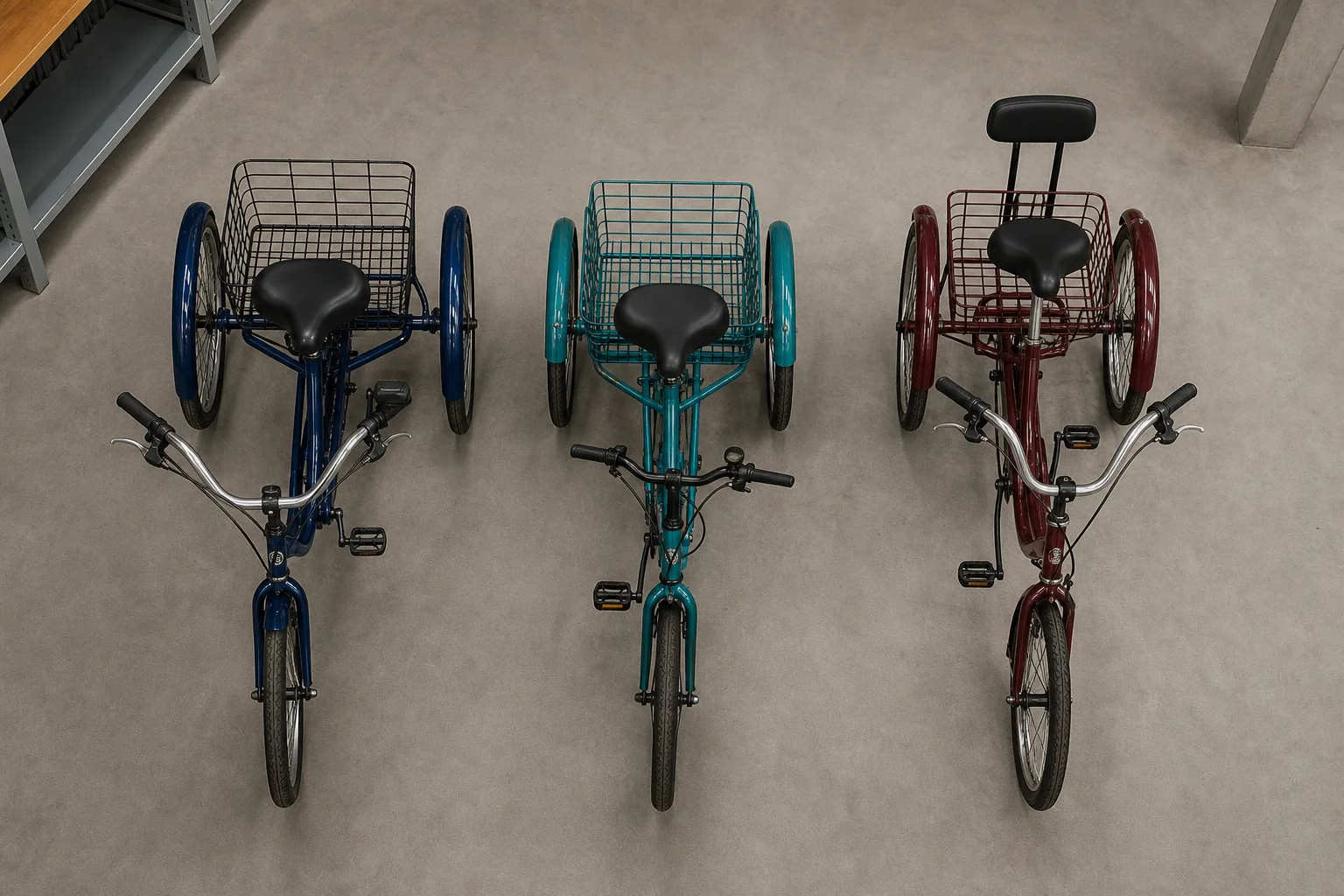
Three-wheeled cycles sold to adults fall into three broad layouts, and the differences between them are not cosmetic. A delta carries one wheel in front and two behind. A tadpole reverses that, two wheels in front and one trailing. A recumbent lays the rider back into a seat with a backrest, and while most recumbent trikes sold in the United States are tadpoles, the seating position is a separate variable worth thinking about on its own. Each choice changes how the machine behaves in a turn, how you get onto it, how drivers see you, and where a bag of groceries can go.
Tipping is a geometry problem, not a mystery
A trike resists tipping until the combined center of gravity of rider and machine moves outside the triangle drawn between the three contact patches. That is the whole of it. Raise the seat and the machine tips at a lower speed. Widen the track and it tips at a higher one. Deltas typically sit the rider high and forward of the rear axle, which puts weight near the narrow tip of the triangle when cornering, so the practical rule is to slow before the turn rather than during it. Tadpoles put two wheels out front where the rider sits between them, low and wide, which is why they hold a line at speeds that would unsettle an upright.
What a careful shopper checks is the actual measured track width, wheel to wheel at the ground, and the height of the seat pan above it. Manufacturers publish both figures inconsistently, so bring a tape measure to the shop. A track under about 30 inches with a seat over 24 inches high behaves very differently from a wide-track machine with a 10-inch seat, and no amount of frame material or brand reputation changes that arithmetic.
Turning circle and where you will actually be riding
Deltas steer the single front wheel and can pivot tightly, which matters if the destination is a supermarket aisle, an apartment corridor, or a driveway you must turn around in. Tadpoles steer two front wheels through linked tie rods, and the turning circle is set by how far those wheels can pivot before rubbing the frame or the rider's heels. Many tadpoles need 15 to 20 feet of road width to turn around cleanly, which rules out a three-point turn on a narrow residential street. Measure the tightest turn on your regular route before you decide.
Recumbent seating adds a related constraint called heel strike, where the rider's foot catches the inside front wheel at full lock. Reputable dealers check this during fitting, adjusting boom length and seat position for your inseam. Ask them to do it in front of you, at full steering lock, in both directions.
Mounting height, visibility, and the trade between them
An upright delta with a seat around 25 to 30 inches lets a rider step over and sit down at roughly chair height, which is why deltas dominate among riders with hip replacements, limited knee flexion, or a fear of the ground. A low recumbent seat asks the rider to lower themselves close to the pavement and then rise from it, a movement some people manage easily and others cannot do at all. Try it four or five times in the parking lot, not once, because the fourth attempt is the honest one.
Height also governs how drivers perceive you. A seated recumbent rider's head sits below the hoodline of most SUVs, which is why serious low riders run a mast-mounted flag, a bright rear light in daylight flash mode, and a wide reflective element on the rear triangle. The Consumer Product Safety Commission oversees reflector and safety requirements for bicycles sold in the United States, and those baseline reflectors are a floor rather than a plan. Upright deltas put the rider's head near car-mirror height and need less compensation, though the same lights help.
Where the cargo goes
This is where deltas earn their keep. Two rear wheels frame a flat, low, rectangular space directly behind the seat, and factory baskets in that position commonly carry 40 to 60 pounds without affecting steering, since the load sits over the driven axle. Tadpoles put cargo behind the single rear wheel, on a rack cantilevered off the tail, where weight sits high and aft and can lighten the front wheels on a climb. Panniers hung low on either side of that rear wheel solve most of it. A recumbent's seat back also supports a mesh bag for the small items you want within reach while moving.
The useful order of questions is route first, body second, load third. Measure the tightest turn you make regularly, sit in each layout enough times to know whether standing back up is comfortable, and then weigh where the weekly shopping will ride. A machine that answers all three will still be there in five years.